
Quick Links
Skip to main contentSkip to navigation

Midwest Surfboard Company

Main Navigation

Loading...

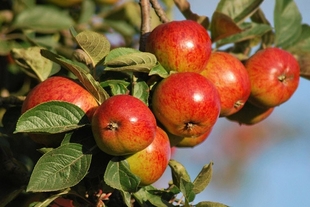
Apples for Cider

The apples that Chapman favored for planting were small and tart "spitters"—named for what you'd likely do if you took a bite of one. But this made them ideal for making hard cider and applejack. This was a far more valuable crop than edible apples. In  The Botany of Desire ,  Michael Pollan  wrote : Up until Prohibition, an apple grown in America was far less likely to be eaten than to wind up in a barrel of cider. In rural areas cider took the place of not only wine and beer but of coffee and . . .
Link to article: Apples for Cider

A Tree Still Lives

Nova, Ohio , is home to a 176-year-old tree, the last known to be planted by Johnny Appleseed himself. It grows tart green apples, which are now used for applesauce and baking in addition to cider making. While Chapman might be glad to see his seeds still bearing fruit, he'd likely be sad to hear this tree is a noted bud source for grafting new apple trees. 

Seeds over Grafting

Pollan credits Chapman's preference for seeds over grafting for creating not only varieties like the delicious and golden delicious, but also the "hardy American apple." Since apples that are grafted are the same as the parent tree, they don’t change. But by forgoing grafting, Johnny created the conditions for apple trees to adapt and thrive in their new world home. "It was the seeds, and the cider, that give the apple the opportunity to discover by trial and error the precise combination of traits required . . .

Land Baron

Chapman developed as an orchardist and nurseryman, and by the early 1800s was working on his own. While his legend imagines him as a messy nomad, in reality, Chapman was much more pragmatic. Frontier law allowed people to lay claim to land through development of a permanent homestead. Such a claim could be made by planting  50 apple trees . So in his travels through Pennsylvania, Ohio, and Illinois, Chapman would plant swaths of seeds to begin an orchard, then sell them to settlers once the land had grown bountiful. This made him . . .

Headline

Donec pede justo, fringilla vel, aliquet nec, vulpe eget, arcu. In enim justo, rhoncus ut, imperdiet venenatis vitae, justo.

Clients: 600+

Donec pede justo, fringilla vel.

Uptime: 99.999%

Donec pede justo, fringilla vel, aliquet nec, vulpe eget, arcu. In enim justo, rhoncus ut, imperdiet venenatis vitae, justo.

Headline

Donec pede justo, fringilla vel, aliquet nec, vulpe eget, arcu. In enim justo, rhoncus ut, imperdiet venenatis vitae, justo.

Sign up for our Newsletter